
Financial crimes pose a significant global concern, and organizations are obligated to comply with anti-money laundering regulations to combat such crimes. As part of this compliance, institutions must identify customers who may have a higher risk of being involved in financial crimes.
PEP screening helps identify high-risk customers and prevent financial crimes. Failure to adhere to these screening procedures can result in penalties from AML regulators for non-compliant organizations.
What is a Politically Exposed Person (PEP)
A Politically Exposed Person (PEP) is an individual who has been entrusted with a prominent public function, either domestically or internationally. Due to their position and influence, PEPs are at a higher risk of being involved in bribery, corruption, or money laundering. The Financial Action Task Force (FATF) provides a detailed framework to understand the definition and types of PEPs, which serves as a global standard for nations and organizations alike.
Examples of Politically Exposed Person (PEP)
PEPs are not just confined to politicians. They can also include senior government officials, judicial authorities, military officers, and even high-ranking members of state-owned enterprises. For instance, a mayor of a large city, a general in the army, or a CEO of a government-owned oil company could all be considered PEPs.
The high-risk nature of these roles is often associated with an enhanced likelihood of their involvement in financial crimes. This susceptibility stems from their ability to influence decisions and control resources, which can potentially be exploited for personal gains.
- Government Roles: High-ranking officials in either the legislative, executive, or judiciary branches of government. This can range from members of parliament and supreme court judges to ambassadors and diplomats.
- Organisational Roles: Individuals holding prominent positions in governmental commercial enterprises or political parties. This could include board members of a central bank, party leaders, or high-ranking military officials.
- Associations: Close associates, either through social or professional connections, to a PEP. This could encompass family members, close relatives, or individuals holding beneficial ownership of a legal entity in which the government is a stakeholder.
Types of PEP defined by FATF
Bearing in mind the broad scope of what is a PEP, the FATF has further divided PEPs into three primary categories, namely Foreign, Domestic, and International Organisation PEPs.
- Foreign PEPs: These are individuals who hold or have held prominent public positions in a foreign country. The risk associated with foreign PEPs is generally higher due to the challenges in obtaining accurate and timely data about these individuals.
- Domestic PEPs: These refer to individuals who hold or have held significant public functions within their home country. While they also pose a risk, it is generally lower than that of their foreign counterparts due to better access to information.
- International Organisation PEPs: These are individuals who hold or have held a high-ranking position in an international organisation. The risk associated with these PEPs can vary depending on factors such as the organisation's transparency, the individual's role, and the level of oversight exercised.
Risk levels for PEPs
The next step is a detailed risk assessment, which is crucial for regulated corporations dealing with PEPs like banks and other financial institutions.
Risk associated with PEPs is generally assessed on multiple factors including the corruption level of the country they originate from, the nature of their role, and their access to significant financial resources.
It's a tiered approach, ranging from low to high risk, and the scrutiny applied varies accordingly. The FATF outlines four levels of risk for PEPs:
- Low-level risk: Supranational or international business officials and senior functionaries, as well as members of local, state, district, and urban assemblies.
- Medium/low-level risk: Top officials of government boards and state-owned enterprises such as heads of judiciaries, banks, military, law enforcement, and high-ranked civil servants in state agencies and religious organizations.
- Medium/high-level risk: Individuals who are members of the government, parliament, judiciary, banks, law enforcement, military, and prominent political parties.
- High-level risk: Heads of state or government, senior politicians, judicial or military officials, senior executives of state-owned corporations, and important party officials.
PEP screening in Africa - current landscape and challenges
Across the African continent, regulations govern the screening of Politically Exposed Persons (PEPs). Numerous African states, including South Africa, are members of the Financial Action Task Force (FATF) and have established regulations requiring firms to conduct PEP screenings for foreign, local, and international PEPs. It's crucial to note that regulatory landscapes in Africa vary, with some states confronting challenges related to corruption and financial crime.
The FATF has identified Botswana, Uganda, Zimbabwe, Ghana, and Botswana as countries with higher risk factors in Africa, necessitating increased vigilance and thorough screening measures to address associated risks.
While most African countries have implemented screening requirements for all PEP categories, variations exist across the continent. For example, firms in Egypt, Mauritania, Eritrea, Guinea, Sierra Leone, Somalia, Malawi, Namibia, and Eswatini are required to screen both foreign and domestic PEPs. In Angola, the focus is on screening foreign and international PEPs, with no stipulation for local screening. Conversely, Algeria, South Sudan, and Tanzania only require screening for foreign PEPs.
The requirement for PEP screening in South Africa originated from the 2009 FATF assessment, underscoring the importance of implementing robust measures to identify and mitigate risks associated with PEPs operating within the country.
Given the diverse regulatory landscape and unique challenges faced by different African jurisdictions, financial institutions operating in Africa must navigate these variations diligently. Adhering to prescribed screening requirements enables institutions to contribute to the prevention of financial crimes, enhances transparency, and safeguards the integrity of their operations in accordance with international best practices.
Guiding principles for building a reliable PEP screening process
A reliable PEP screening process relies on a few key elements for success:
- Quality of data: Customer data is critical for designing a reliable PEP process. It directly translates into the ability to quickly and accurately determine PEP status.
- Interfacing with global databases: Comprehensive PEP screening process includes screening customers against multiple databases across international, regional, local, and proprietary sources.
- Risk modelling: Customisable search profiles should be used to apply different search settings to groups of customers based on a firm’s business model and risk appetite.
- Ongoing monitoring: As PEP legislation evolves over time, businesses must proactively monitor regulatory trends to understand their implications and adapt their processes accordingly, ensuring ongoing adaptability and compliance.
By embracing these guiding principles and key considerations, FIs can establish a robust and efficient PEP screening process, bolstering their ability to combat financial risks and safeguard their operations with confidence.
Setting up a PEP screening process
Setting up a PEP screening process involves several steps, including:
- Determine your PEP risks and obligations: Identify the risk associated with your business and the PEP lists relevant to your business based on the jurisdictions in which you operate.
- Choose PEP screening software: Choose PEP screening software that can screen against the PEP lists you’ve identified.
- Customise your PEP compliance and screening program: Customise your internal controls and procedures as well as your screening tools and configurations to effectively identify and manage PEP risks.
- Integrate the software: Incorporate the PEP screening software into your existing systems and workflows to ensure a seamless and efficient process.
- Educate your team: Train your personnel on how to utilize the screening software and the significance of adhering to PEP compliance requirements.
- Regularly screen against PEP lists: Conduct PEP screening during your KYC process and on a routine basis for all customers with whom your business interacts.
- Keep up to date with changes: Keep up to date with any changes or revisions to PEP lists and adjust your screening program accordingly.
- Monitor and evaluate the program’s effectiveness: Develop procedures for assessing and analyzing the program’s effectiveness and ensure that it is adaptable and can adjust to changes in your business or the regulatory environment.
Challenges to PEP screening
Businesses may encounter several hurdles that can impact the effectiveness of PEP screening. Some common obstacles include:
- Keeping PEP data up to date: PEP lists are frequently updated, and businesses must ensure their screening software is up to date to identify new risks.
- Compliance: Implementing a comprehensive PEP screening program requires significant investments in terms of resources, time, and money.
- Keeping up with regulations: PEP regulations and requirements can differ across various jurisdictions globally, making it difficult for businesses to remain informed and compliant, thus avoiding potential violations.
- Data quality: The accuracy of PEP screening results can be impacted by the quality of the data used in the screening process. Poor data quality can result in false negatives, leaving the business exposed to the risk of substantial fines.
- Volume of data: For businesses with large customer bases and high transaction volumes, processing significant amounts of customer data quickly while reducing false positives can be a challenging task.
- False positives: Sanctions screening software may produce alerts that are not valid, resulting in unnecessary delays and increased costs in review processes.
Laboremus is leading the change towards digital banking in Africa
STREAMLINE by Laboremus helps you acquire customers faster with reliable KYC / KYB and digital customer onboarding. Onboard customers in minutes by automating KYC checks and digitally establishing customer identity and running deep customer due diligence.
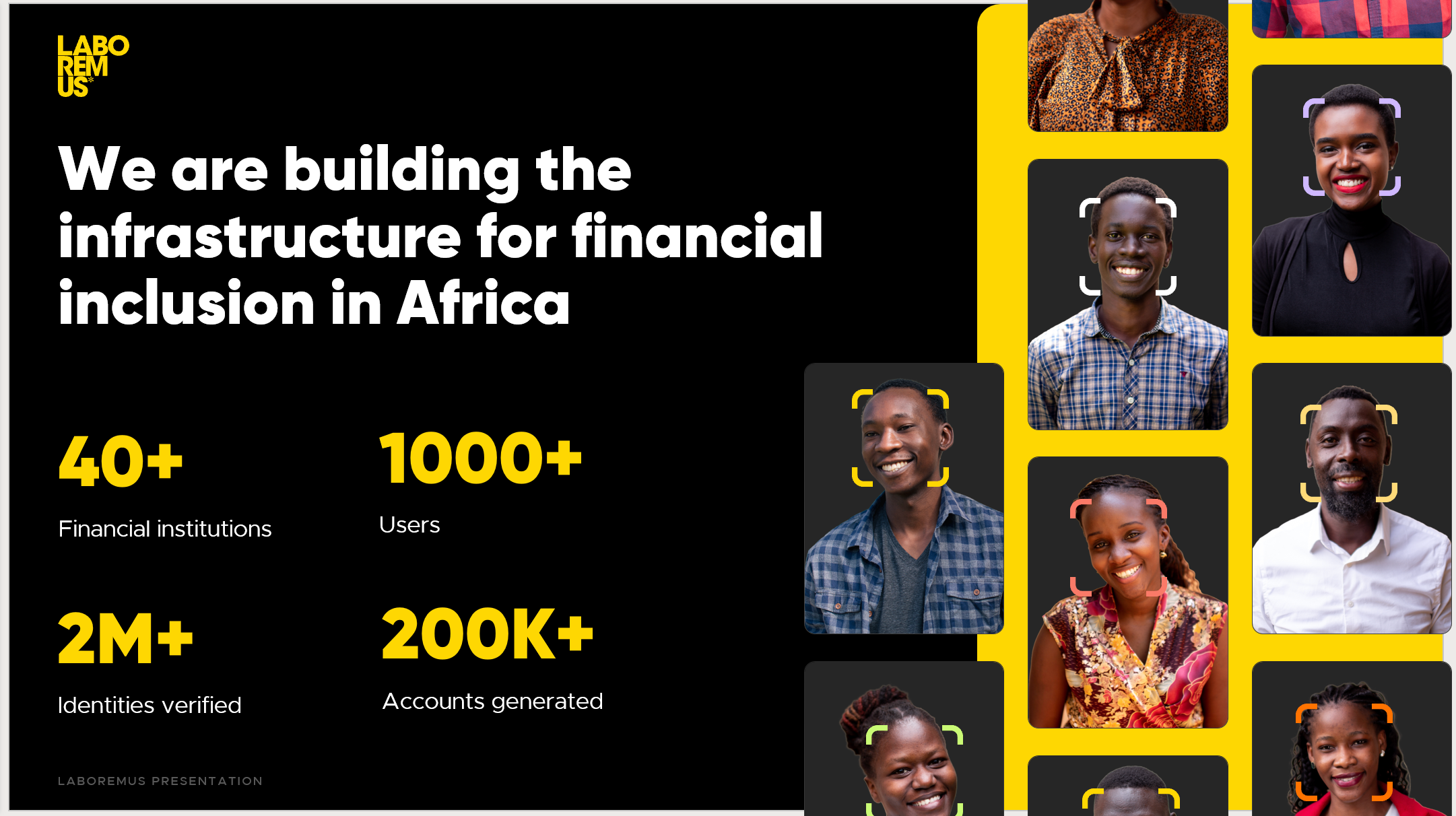
Laboremus is creating a safe, reliable digital infrastructure for financial inclusion in Africa
Partnerships with Government Organisations makes Laboremus the most reliable identity verification and onboarding platform in Africa. STREAMLINE by Laboremus powered AML/PEP verification is used by leading banks in Africa.
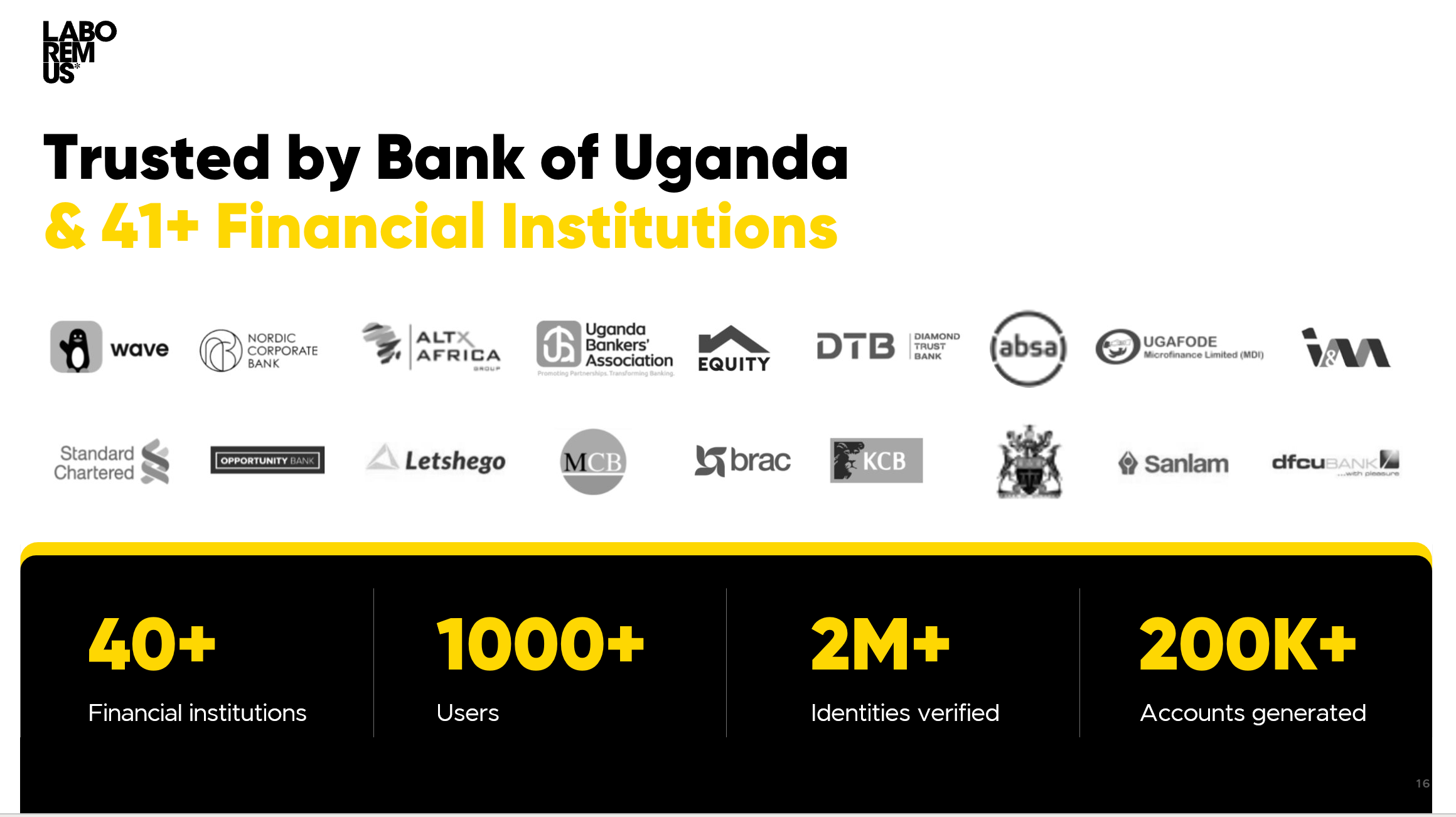
In Uganda, Laboremus is used by over 40 financial institutions and is trusted by Bank of Uganda and Uganda Bankers Association.
For more information on STREAMLINE by Laboremus and our digital KYC, KYB and customer onboarding solutions, please visit www.laboremus.ug. You can also connect with one of our product experts to understand how you can automate customer due diligence and onboarding for your organisation.