What is NIRA verification, and why does every Ugandan bank need it?
The National Identification and Registration Authority, NIRA, is the central registry of every Ugandan citizen and resident. When a bank, fintech, MFI or SACCO opens an account in Uganda, the Bank of Uganda and the Financial Intelligence Authority both require the institution to confirm the customer's identity against an authoritative source. In Uganda, that source is NIRA.
NIRA verification is the process of checking a customer's National ID number (NIN), name and biometrics against NIRA's live database. Done right, it returns a verdict in seconds. Done wrong, or skipped entirely, it leaves the institution exposed to identity fraud and AML penalties.
Who is required to do NIRA verification in Uganda?
Every regulated institution that opens, services or extends credit to a customer in Uganda is covered. That includes:
- Banks supervised by the Bank of Uganda, both Tier 1 commercial banks and Tier 2/3 institutions.
- Microfinance Deposit-taking Institutions (MDIs) and Tier-4 SACCOs under UMRA.
- Insurance companies under the IRA.
- Mobile money operators and licensed fintechs under the National Payment Systems Act.
- Telcos issuing SIM cards under UCC's SIM-registration rules.
NIRA verification is not optional, it is mandated as part of customer due diligence under the Anti-Money Laundering Act and the FIA's KYC guidelines.
How NIRA verification works in practice
A complete NIRA verification typically combines four things:
- NIN lookup. The customer's National ID number is checked against NIRA's records. A live match confirms the NIN is valid, the holder is alive, and the registered name and date of birth match the application.
- Document verification. The customer's National ID card is scanned. Security features are validated and the printed data is OCR-extracted and reconciled against the NIRA record.
- Biometric face match. A live selfie (or branch-captured photo) is compared to the NIRA photo. A high match score confirms the person presenting the ID is the registered holder.
- Liveness check. A short, prompted action, blink, turn, smile, confirms the face is a live person, not a photo or video of one.
When all four pass, the institution has cryptographic evidence that the customer is who they claim to be, and a full audit trail to show the regulator.
What goes wrong without it
Banks that skip live NIRA verification fall back on visual inspection of the ID card. That is exactly the gap fraudsters target. Tampered cards, NINs cloned from a deceased relative, and synthetic identities, assembled from a real NIN, a real face and a fake name, are the most common attack patterns in East Africa.
The downstream effects are not just fraud losses. Onboarding a person whose identity cannot be verified breaks the bank's AML/CFT obligations, exposes it to FIA penalties, and, if the customer turns out to be on a sanctions list, to international enforcement.
What good NIRA verification looks like
The benchmark Ugandan banks should aim for:
- Direct integration with the NIRA database, not a scanned-copy check against a static dataset.
- Sub-15-second median response from NIN entry to verdict, with biometric and document checks running in parallel.
- A single auditable report per check, retained for the regulator's seven-year window.
- Graceful degradation when NIRA is unreachable, queueing the request rather than failing the customer.
How Laboremus runs NIRA verification
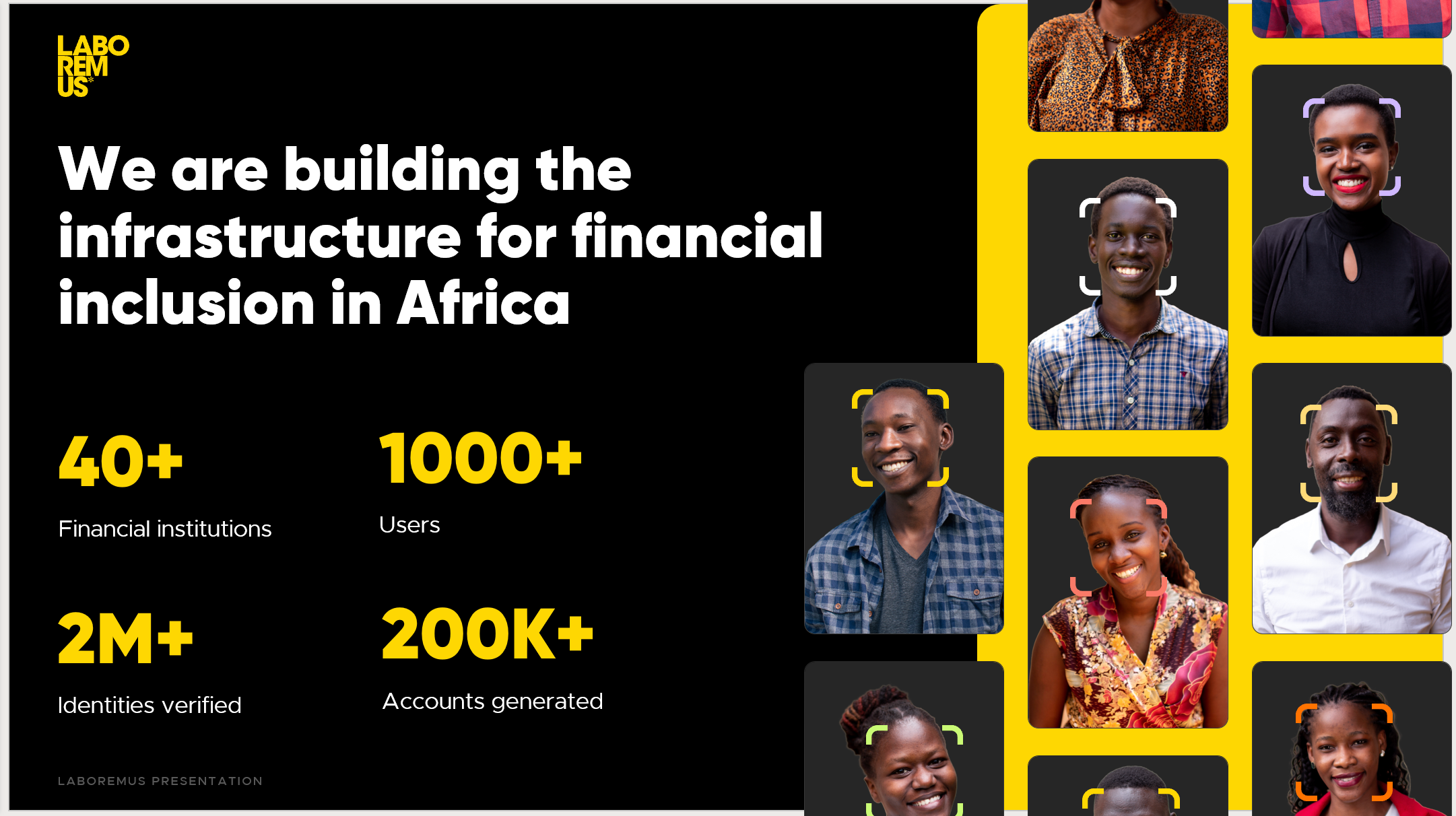
STREAMLINE by Laboremus is integrated directly with the central NIRA database. We run NIN, document, biometric and AML/PEP checks in parallel, and stitch the result into a single, exportable KYC report. Over 40 regulated institutions in Uganda, banks, MFIs, SACCOs, insurers and fintechs, run their KYC on STREAMLINE today. The median check is under 12 seconds, end to end.
If you would like to see STREAMLINE running on your own customer file, the first walkthrough takes 30 minutes.